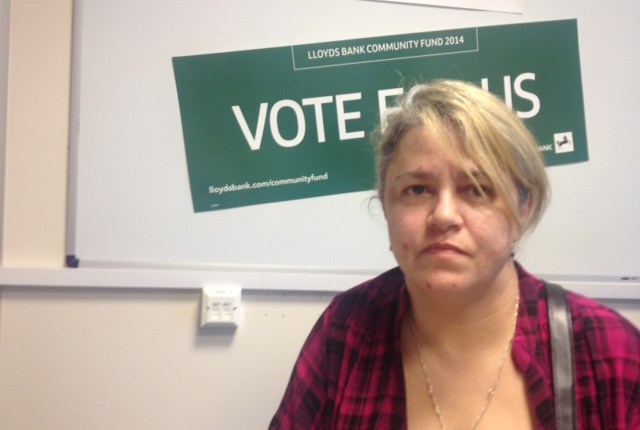
Life after #Atos: Good news for Deborah

Life after #Atos: Good news for Deborah
Deborah successfully challenges the decision by #Atos to deem her 'fit for work'.
Deborah successfully challenges the decision by #Atos to deem her ‘fit for work’.

What a difference a couple of days can make. Last week Deborah came into this London Trussell Trust food bank in despair . She ‘d had  a face-to-face Atos work capability assessment (WCA) back in June, and despite her multiple chronic health problems, she was awarded zero points. This meant that from July 24 this year, she lost her employment and support allowance (ESA). This single parent of 51 – with one of her four children still at school and a dependent – was forced to accept a voucher for the food bank from a social worker.

By last Friday, things had improved massively. Deborah came into the Greenwich food bank to tell us that her application for a mandatory reconsideration has been successful. Following this review of  her health issues and the original assessment, she’s now been awarded 18 points (she needed 15 to remain entitled to ESA).  Deborah believes that an intervention made by an NHS psychologist  who became aware of her difficulties has made a difference. That person  worked with her GP to supply more information about the impact of her many health difficulties on her ability to work.

This is of course a very positive development. But a key puzzle remains unanswered. How did Deborah end up with no points first time round, given the range and complexity of her health conditions? These include arthritis in the lower spine, hips, neck and knees, congenital heart problems, Irritable Bowel Syndrome and long-term depression. Deborah described being having to be helped on and off the couch at the WCA by a health service professional that she assumed was a doctor. She says she was in pain throughout the assessment. In the written assessment that person claimed Deborah had no problems getting on and off the couch and wasn’t in pain. There was also the strange matter of the coat. Deborah says her assessment referred to her being able to take her coat on and off. But she insists she was not wearing a coat that day.

Isn’t Deborah’s case an example if one more were needed of just how slapdash (at best) and unfit for purpose the WCA process has become? Yes, the original decision may have been revised. She will now get ESA again, but she is waiting to see if that will be backdated from late July. She has been placed in the Work Related Activity Group (WRAG) for 18 months from 24 July 2014. Deborah was ‘luckier’ than some – she still had some money coming in during this time – her disability living allowance (DLA). Her sister was also able to keep an eye on her for a few weeks.

But this wasn’t enough of a safety net to stop her from needing emergency food aid, with all that this involves for someone with depression and in  poor  physical health.

The new system of mandatory reconsideration before appeals introduced in October 2013 seemed to pick up the flaws in Deborah’s assessment. It may be the case that the drop by 92% in ESA appeals in April to June 2014 is mostly down to changes of decision in favour of  prospective appellants. But we don’t yet have the figures to show how many reconsiderations result in changed decisions.

People like Deborah appear to be having to wait for six to eight weeks – maybe this is ‘fast’ – do you know better? – for the outcome of mandatory reviews. If the review outcome leads to the decision being overturned,  it looks like they spend a minimum of  six to eight weeks without the benefit they depend on. If the review is unsuccessful then how long they are languishing and at what cost? We know only too well what can happen when the benefits of the chronically ill are stopped. In Deborah’s case she lost her benefit because of a failed ‘fit for work’ test. David Clapson, a former soldier, died after he lost his JSA as a result of a sanction. But the effect on people’s lives is the same – access to the means of survival is vastly reduced temporarily or completely blocked permanently. ‘Lucky’ Deborah had a social work who became involved and offered a food bank voucher. The psychologist and Deborah’s GP liaised to provide health information that appears to have made the difference. However the evidence suggests that many others are too vulnerable by this stage to fight on for their benefits or to access basic means of survival – such as a food bank voucher .

As the author of this Guardian article about David Clapson points out, ‘I’ll resist calling Clapson’s death a tragedy. Tragedy suggests a one-off incident, a rarity that couldn’t be prevented. What was done to Clapson – and it was done, not something that simply happened – is a particularly horrific example of what has, almost silently, turned into a widespread crisis. More than a million people in this country have had their benefits stopped over the past year. Sanctions against chronically ill and disabled people have risen by 580% in a year. This is a system out of control.’

Some advice on WCA assessments has been offered by readers. Welfare rights consultant Jim Strang reminds those going through the process that they can inform the assessor that they would like their assessment recorded. This should be requested in advance. He adds that anyone whose ESA is stopped can also make a fresh claim for housing benefit, based on income.

Paul Trembath says that those who go ahead with an ESA appeal following mandatory reconsideration (and the Department for Work and Pensions have had confirmation from the Tribunals Service) can ask for ESA to be paid again even if they are claiming JSA – ‘they have to ask, the DWP will not suggest’.

Many thanks to Jim and Paul for their advice – and a big thanks to Deborah for speaking out.

Deborah, her ATOS debacle, and the missing coat mystery

Deborah, her ATOS debacle, and the missing coat mystery

Deborah Ruby, who had her ESA stopped, despite her multiple chronic health issues.
Deborah Ruby, who has had her ESA stopped, despite her multiple chronic health issues.
Deborah Ruby struggled into this London Trussell Trust food bank with her voucher. She’s a 51-year-old lady with multiple health issues. These include, but are not limited to, arthritis in the lower spine, hips, neck and knees, depression, severe Irritable Bowel Syndrome and congenital heart problems. She has been separated from her husband for 12 years and has four children – the youngest of whom is still at school.

A social worker gave her a voucher for the food bank after her employment and support allowance (ESA) was stopped on July 25. This stoppage followed her ATOS work capability assessment in June. Atos Healthcare is of course making an early exit from its contract to carry out “fit for work” tests on disability claimants. If Deborah’s experience is typical, the ATOS assessment process is if possible leading to ever more unfair outcomes for individuals. She describes the worst sort of bureaucratic bungling, and a medical report that appears to bear little resemblance to Deborah’s account of the ATOS medical interview it was based on.

Given what Deborah says happened at the medical, it’s hard to see how she wouldn’t succeed in her appeal. But the likelihood of a successful appeal at some future date isn’t any consolation to someone in her position. For nearly eight weeks she’s had no ESA and no money for food. Her sister – the only sibling who could help – had been able to offer some assistance over the summer. But now she’s had to go back to her home outside the UK. So last week Deborah hit a full-blown crisis – and has no idea if or when she will receive any benefits again. Now that her ESA has been stopped, her housing benefit has also been stopped – pushing her into arrears.

Deborah says she brought along a letter from her doctor to the Croydon medical, describing all her medical conditions. She says that at the medical, she was having so much difficulty moving around – she needs two knee replacement operations – that the doctor had to help her on and off the couch. She was in pain throughout the assessment.

The letter that followed informing her of the decision and the medical report was both contradictory and wrong, says Deborah. While there was a statement at the top of the letter from the Department for Work and Pensions saying that she would be receiving an award and that they would write to her in due course, the assessment and medical report contained in the correspondence told her that she had failed the medical and had in fact been given zero points. She would have needed 15 points to keep her ESA award. According to Deborah, “the report said she could get on and off the couch and she was not in pain, and it said I had no problems putting on my coat myself – but I didn’t have a coat with me. The assessment referred to my depression and other illnesses with the exception of fibromyalgia – but they feel that I’m fit for work. It referred to my incontinence, and she (the doctor) acknowledged that, but said that I can still go out. It seems that in the report they put down the things they wanted to put. The doctor’s report also says ‘she was well enough that she made it here’ and I feel she glossed over and downplayed everything.”

Though initially confused about the contradictory letter, Deborah said that when a follow-up letter did not arrive within a few days, she then sent back a copy of the assessment form as part of an appeal, indicating where she disagreed with the doctor’s assessment. The DWP sent a letter back saying that it had read her challenge, but that it agreed with the ATOS decision. It told her to apply for jobseeker’s allowance (JSA). She has been back to her GP to get medical certificates saying that she cannot attend work-related programmes or work because of her health, and an NHS psychologist is also liaising with her GP ahead of the appeal. Meanwhile, Deborah is having to deal with letters from the council about her stopped housing benefits.

While it at least appears as if she has got past the reconsideration stages and lodged an appeal successfully, she has no idea when it might be heard and has been left stranded with no support while she waits.

According to the latest tribunal statistics, there has been a drop of 92% in employment and support allowance (ESA) appeals and a 93% drop in Jobseekers Allowance (JSA) appeals in April to June 2014 compared to the same period last year. A new system of mandatory reconsiderations before appeals was introduced by the DWP for ESA and JSA at the end of October 2013. Figures have yet to be published by the DWP to show how many reconsiderations result in a change of decision.

We do of course need to know much much more about the people who don’t get as far as an appeal. Precisely how many people are left destitute or dead because they’ve abandoned – or been abandoned by – the system at this most tortuous stage?

The state owes citizens money they are entitled to – then they fall into debt

Manager of Greenwich food bank Alan Robinson has been aware for some time that the clients who come here for help need more than the food they’re given to see them through an immediate crisis. They also require longer-term support to tackle the underlying problems, which often include inadequate incomes and unmanageable debts. The local authority – The Royal Borough of Greenwich – is also mindful of this. The two organisations have submitted a bid for funding that would enable the food bank to “triage” clients with money problems.

If the joint bid is successful, the funding would come from the Money Advice Trust – which has today launched a new report saying that households are becoming susceptible to serious debt problems because they can’t afford basic household bills.

Alan said: “The Money Advice Trust is offering funding for initiatives that are innovative, but help meet people’s basic needs…approaches that would help them get relief from debt and educate people so they don’t get into debt. Greenwich Council had been bouncing this problem around internally, so they called me up and said could we work together and get a bid in.” The initial “triage” would take place at the borough’s food banks, which are part of the UK-wide network of Trussell Trust food banks. Clients with the most severe problems would be immediately referred to specialist debt advisors in the borough – either Christians Against Poverty (CAP), Meridian Money Advice, or Citizens Advice.

A second group assessed as heading for serious debt problems would get advice from trained volunteers, and Alan says the food bank may also employ a debt and advice specialist. A third group of people with the least severe problems would get help and encouragement on a range of issues, including advice on cookery classes, “smart” shopping and smoking cessation. The gateway to the advice would be food banks, but Alan says it’s possible that the scheme could be extended to other venues including children’s centres. The proposed scheme mirrors a recent announcement by the Trussell Trust that it is to launch a pilot scheme to give financial advice. The move comes after the food bank charity received a six-figure donation from money saving expert Martin Lewis. Lewis is quoted in the Guardian saying: “Those who go to food banks are already open to asking for help….If we can intervene at that point…it will hopefully cut down on the number of return visits.”

While what Lewis says is undoubtedly true, it’s crucial to remember what the Trussell Trust itself underlined in its June report Below the Breadline: The Relentless Rise in Food Poverty, published jointly with Oxfam and Church Action on Poverty. The report says that “cuts to social security since April 2013 have had a severe impact on poor and vulnerable families across the UK” and that “these cuts have been coupled with an increasingly strict and often misapplied sanctions regime – 58 per cent of sanction decisions are successfully challenged, suggesting that many people needlessly suffer a loss of income through no fault of their own”.

The report says the abolition of the Social Fund has stopped thousands of households from being able to access crisis loans. The Trussell Trust, “estimates that 49 per cent of people referred to food banks are there due to problems with social security payments or because they have been refused a crisis loan”.

The move by the Trussell Trust to launch the pilot money advice scheme and the bid to run something similar here in Greenwich are to be welcomed. But expert social security advice and help with challenging sanctions and speeding up back payments appear to be what clients need most. In essence, the state owes them money that they are entitled to. They’re not getting it, hence they are in debt and that leads to them not being able to pay their water bill or council tax. The most effective cure would of course be a humane social security regime, and an approach to sanctions that is fair and proportionate. A move away from zero hours contracts by employers would also be a significant move to transform lives. The problems faced by most of the people who visit the food bank are not fundamentally caused by lifestyle issues or bad choices. The vast majority of the food bank clients are innocent victims of an increasingly unfair and cruel welfare system.