Tight budgets, poor diets, judgmental callers

Mark Bothwell, who's still waiting for his ESA claim to be processed.
Mark Bothwell, who’s still waiting for his ESA claim to be processed.

A discussion programme on the Nicky Campbell Radio 5 Live Breakfast show this week on whether a tight budget means a poor diet  prompted quite a few callers to make comments including, ‘it’s all down to organising yourself’ or ‘it’s due to a lack of education’. Here at the London food bank, the majority of the people who come here for help know exactly what they should be eating.  They know what a healthy diet looks like. They’re just desperate and hungry, and can’t often afford to buy items such as meat or many fresh vegetables. Or anything much at all. That’s why they’ve been given a voucher for the food bank by a frontline care professional such as a GP.

People on low in-work incomes  – for example those working two zero-hours contracts paid below the Living Wage and often at the National Minimum Wage to make ends meet – don’t have the money to buy much meat protein. They have to focus on keeping a roof over their heads, and trying to ensure they have the electricity or gas to cook with. Neither do they often have the luxury of  time or the mental and physical energy to plan, shop for, cook and serve nutritionally balanced meals. In London, they probably can’t afford to run a car – which makes doing a bulk shop  – very handy when you’re time poor – really hard. They might live on a large estate, without the great  range of shops on their doorsteps that would allow them to make easy price comparisons. There would probably be a chip shop though, that would at least feed their family cheaply. Once they do get some food in, many can’t spend a lot of time preparing it. Those who are short of money often prioritize feeding their kids rather than themselves.

As for those on UK benefit levels that have been described by the European Committee of Social Rights as ‘manifestly inadequate’ , the chances of them being able to avoid food poverty are patently not reflected by the facts.  This food bank is part of the  Trussell Trust network of 420 UK food banks, which fed 913.138 people in 2013-14. But using research by Eoin Clarke, the Trussell Trust represents under half the estimated emergency food providers in the UK. He has listed 960 emergency providers, including food banks. Why so many  – an exponential growth – if a poor diet is down to poor education or disorganised individuals?

What about those who are among the increasing numbers who simply are not getting even these internationally criticised levels of benefits through on time  – either because of  delays or sanctions? Mark, whose case has been covered before here, has a serious shoulder problem and is in terrible pain. His arm is in a sling. He’s on jobseeker’s allowance (JSA) of £72.40 a week, and has applied for employment and support allowance (ESA). He put his claim for to this higher (but not that much higher) level of support about 10 weeks ago. He’s still waiting for his claim to be processed. Meanwhile, he’s trying to eke out what he describes as an existence.  Yes, most of the time he sees it as an existence rather than a fulfilling life. He told me: ‘The other day I was so bored I walked to Dartford and back. It took me nearly three hours each way – stopping every so often to rest. It was just to get me out of the flat.’

Unexpected bills  throw him off his budget, and this is what forced him to call into the food bank for a cup of tea and to see if we had any fresh food (sometimes people donate food that has to be given out on the day, or there’s some tinned food that is still in date but that can’t be included in the packs given out to those with vouchers). A direct debit he didn’t have quite enough funds for was returned twice to his bank, and the bank charged him £8 each time. This loss of £16 would have been the money he spent on food. Mark, who has to ensure he eats when he takes his strong painkillers a couple of times each day, said he had an appointment with his GP the next day, who would hopefully gave him a food bank voucher. So he would have to go to the only food bank open on a Saturday, and haul the bags home using his one good arm. He wouldn’t have got the bus, because he can’t afford it.

I’m coming across more and more people at the food bank who are even worse off than Mark if that’s possible. One client – Ben – a widower of 58 who came into the food bank hungry yesterday, is actually destitute . This is because his JSA was put on hold in early March, around the time the work he was offered through the controversial Universal Jobmatch system finished after two days – and he’s received nothing from the Department for Work and Pensions (DWP) since then. I’ll be detailing his case next.

Welcome to the UK in 2014. We should be proud of the way we treat our most vulnerable. The President of the UK Faculty of Public Health Professor John Ashton has written – along with John Middleton and Tim Lang – an open letter to Prime Minister David Cameron on food poverty in the UK. In the letter to the Lancet on behalf of 170 signatories, he mentions the ‘worrying gap in health circumstances and outcomes between rich and poor people in the UK.’ He says UK food prices have ‘risen by 12 per cent in real terms since 2007, returning the cost of food relative to other goods to that in the 1990s’. He notes that in the same period, UK workers have suffered a 7.6 per cent fall in real wages.  He adds: ‘It therefore seems likely that increasing numbers of people on low wages are not earning enough money to meet their most basic nutritional needs to maintain a healthy diet. We should not accept this situation in the UK, the world’s sixth largest economy and the third largest in Europe.’ He says that during the past five years, ‘food has been one of the three top factors in price inflation, sufficient to worry even higher-income consumers’. This inflation, he continues, ‘ has translated into families cutting back on fresh fruit and vegetables and buying cheap, sweet, fatty, salty, or processed foods that need little cooking’. A ‘vicious circle’ is set in motion, with poorer people ‘having worse diets and contributing to the worrying rise in obesity, diabetes and other dietary-related diseases’.

As Professor Ashton states so clearly to the Prime Minister, even the higher-income consumers are seeing the effects of  inflation on their food budgets. There’s obviously an impact there, and it’s right that this aspect is highlighted. But are we fighting hard enough for people such as Ben, who spent yesterday morning hungry and don’t currently have any budget for food? Or for anything….



Mark: State welfare is failing our citizens and food banks aren’t the answer

Mark: State welfare is failing our citizens and food banks aren’t the answer
Mark Bothwell. Still in pain and waiting for the outcome of his employment and support allowance application.

A study presented earlier this week to the All-Party Parliamentary Group on Hunger and Food Poverty says the rise in food banks and charity food is a clear sign of the inadequate nature of social security provision and the way it is delivered. As reported in the Guardian, the report by Sheffield University researcher Hannah Lambie-Mumford warns of the danger of charity food becoming a fundamental part of, or even replacement for, formerly state-funded welfare.

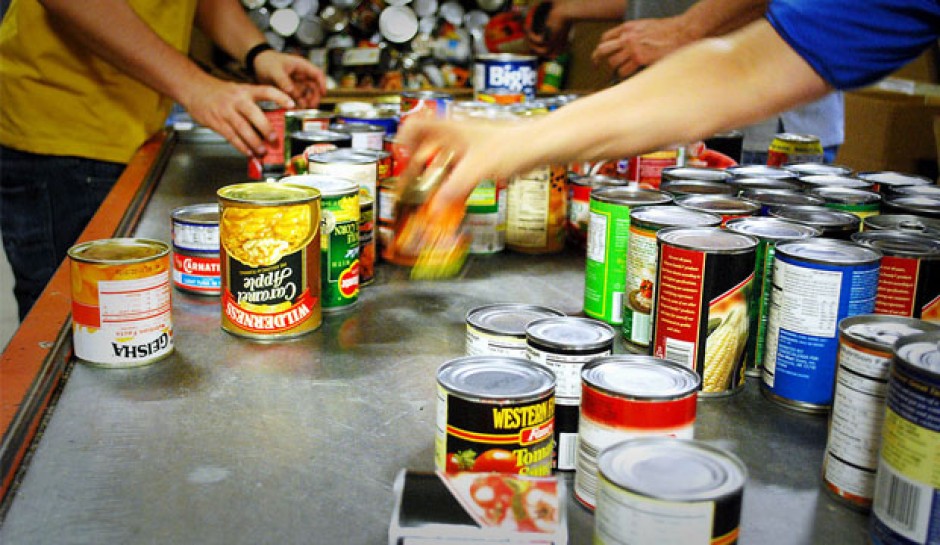
As shown by Eoin Clarke here, by January this year the number of food banks in the UK had grown to more than 1,080. Give that number a bit more consideration. There are more food banks now in the UK than there are branches of Sainsbury’s. The experience of Mark Bothwell (pictured above), here at the London food bank, serves to illustrate the effect of our inadequate welfare system on real lives. Individuals with multiple, deep-set problems are being let down, and food banks can do nothing more for them than provide short-term food. Crisis packs of long life food are not, and can’t be, a solution for people who are being left month upon month with inadequate, delayed, or downright non-existent welfare payments.

Mark, who injured his right shoulder back in October, is on jobseeker’s allowance (JSA), but is still waiting to hear the outcome of his application for employment and support allowance (ESA). He tells me: ‘They say it will take a while’. He won’t be able to work for the foreseeable future, while he waits for his shoulder to heal. In the meantime, he’s trying to pay off some old debts ( a doorstep loan and a payment to Brighthouse) at the usual extortionate rates, in addition to the repayments on a crisis loan. That doesn’t leave any sensible amount of money left for food out of the current JSA rate of between £125 and £145 a fortnight (depending on whether the crisis loan repayment amount has been deducted).

He’s in a terrible way – in constant pain every day. His GP has put him back on the drug tramadol, and he says that some days ‘it literally feels like my flesh is on fire’. He’s struggling to keep his spirits up: ‘If I allowed myself to feel all the bad feelings I wouldn’t be able to function. There are people who are worse off.’ There are days when he goes without food, but he adds: ‘I heard a family in Afganistan talk on the news. The man had lost his younger son in a bombing, and the elder son was injured. A couple of days without food seems like nothing. My situation pales to nothing in comparison.’

Earlier in the year, Benefit Tales highlighted that the European Committee of Social Rights declared in a report that minimum levels of benefits – short-term and long-term incapacity benefit, state pension and jobseeker’s allowance – in Great Britain were ‘manifestly inadequate’.

The Coalition government should be deeply shamed by these comments from international observers. Maybe here at home we’ve got so used to the inequities that the burden on individuals and families isn’t registering any more. John Glen, parliamentary aide to Eric Pickles, said recently that partisan politics needs to be taken out of the food bank debate. He also said he hoped the all-party parliamentary inquiry would examine the underlying causes of the use of food banks. This is the same man who suggested in 2011 that everyone in work should have enough money for food.

Would he like food banks to quietly yet relentlessly continue transforming into an industrially-scaled charitably-funded rescuer of failing state provision? It’s easier to hand out food bank vouchers that you’re not paying for than to make sure your citizens get decent and humane levels of social security, paid on time.

While this shameful situation gets worse by the week it seems Mr Glen would prefer us not to get political about it.

Top award for this London borough’s food banks

cropped-foodbank.jpg
Something worth celebrating happened here recently. Nominated by members of the public, the foodbank network in the borough got a special award for its contribution to the community. The ceremony was held at the town hall, and the lovely and very dedicated food bank manager Alan was there to receive it.

As I’ve said before, this cash-strapped local council isn’t perfect, but it does try harder than most to help the growing number of vulnerable people in the area. It also values social cohension and is striving against considerable odds to address issues of inequality and poverty.

The council is being starved of funding, like all local authorities. The Local Government Association (LGA) has pointed out that overall funding for local government has been cut by more than 40 per cent in the course of this Parliament. The LGA has already called on the government to think again about getting rid of the £347m emergency welfare fund for vulnerable people facing short-term crisis. This council knows that these are the very group most in need of food banks. So it does what it can. It provides space at a peppercorn rent for the spacious warehouse and its welcome centre, and ensures food donation baskets are provided in a number of council buildings that are open to the public. The support it can provide is limited, but of a practical, hands-on nature.

Since April 2013, this borough’s Trussell Trust food banks have given out enough food to provide 35,000 meals. It has fulfilled over 1800 vouchers, which translates to about 2300 adults and 1500 children. Alan’s team has collected nearly 40 tonnes of food and distributed just over 30 tonnes through the eight welcome centres across the borough. The organisation is now fully established, with strong teams in the warehouse and the welcome centres.

Alan adds: ‘All these numbers far exceed our expectation at the beginning of the year. It is not my wish to enter the political debate but I will share with you that the vast majority of people we meet are sincere and their need is genuine. We continue to be grateful to the many churches and schools who have been the chief contributors of food.’ This, he says, has been supported by the permanent collection points facilitated by the local council and by collection points in local Tesco and Sainsbury supermarkets. The challenge continues to gather in sufficient of the less popular food items so that the volunteers can make up complete packs. The local food bank network now has a clever App that provides details of food abundances and shortages, and will help enormously (assuming donors have smartphones etc).

Some people are falling through the safety net, though. They’re very vulnerable indeed, and for a significant number food bank packs are not going to solve their problems. What they need is long-term support and intervention – from a state that’s capable of engaging with them. They deserve welfare policies that offer proper help to individuals struggling with a host of adverse circumstances, including chronic ill health. Not just sanctioning their benefits when they ‘fail’ to apply for enough ‘jobs’, or being left without benefits while they wait in limbo for decisions on employment and support allowance (ESA) to be reconsidered.